
The process of developing a medical device or digital health solution is a very complicated and highly regulated process that requires huge investment over a very extended timeline. Unlike consumer technologies, medtech companies must address scientific validation, clinical risk, and regulatory compliance at a very early stage in development-normally more than a decade before it is available. Medtech incubators offer a supportive environment and provide infrastructure, mentorship, clinical access, and funding support. This helps founders overcome challenges, reduce risk, and accelerate validation and credibility. 1-3
A medtech incubator, commonly equated with an accelerator, but it provides a specialized framework that enables early-stage startups to advance an idea into clinically validated and regulatory-prepared medical technologies. In general, they offer all-around support through access to specialized laboratory infrastructure, engineering and prototyping resources, regulatory and quality management expertise, and clinical and hospital networks. Usually, early-stage founders must surmount major barriers due to the lack of access to certified laboratories, advanced prototyping facilities, and real-world clinical environments. These limitations make product development slower and complicate the paths toward regulatory approval. Medtech incubators and accelerators deal with these issues in the work by making a dedicated facility available to the startup and integrating it into the health ecosystems. Of note, incubators located within the environment of the hospital are those allowing the founding team to closely collaborate with clinicians, test prototypes in real-time in current clinical workflows, and receive early feedback regarding usability, safety, and performance. Proximity to end-users allows for enhancement of reliability, effectiveness, and adoptability of the final medical device or technology. 3,4
Most medtech startups cannot afford the expensive equipment needed to prototype, conduct wet-lab experiments, perform biosafety testing, calibrate sensors, or integrate with digital health. Incubators provide shared access to clean rooms, biosafety labs, mechanical prototyping areas, and early verification equipment that lets startups rapidly and inexpensively test and iterate designs, accelerating early development without large upfront investments. Incubators are particularly effective in device-centric R&D in resource-constrained or emerging-medtech ecosystems.
Regulatory compliance is key to the success of medical devices. Thus, incubators and accelerators connect entrepreneurs with support structures who assist with planning under frameworks such as the EU MDR/IVDR, FDA 510(k), and laws about digital health, among others. Supporting risk management, usability studies, documentation, and quality systems upfront makes it less uncertain that clinical evidence will meet regulatory requirements. The programs also support continuous regulatory needs and machine learning validation for AI-enabled devices.
The design needs to be proactively engaged with clinicians and healthcare settings so as to make the gadgets safe, effective, and useful. In fact, a significant number of incubators closely work with hospitals, where founders have the opportunity to test their prototypes in real clinical settings and receive feedback on changes in usability and places of workflow or safety barriers early. The preliminary validation enhances clinical relevance, accelerates design change, and supports regulatory submission.
MedTech startups find it challenging to secure early-stage funding due to the high-risk nature of proof-of-concept work and generally lack attractiveness to investors. Incubators can facilitate that divide by introducing startups to venture capital targeting medtech, grant funding, and non-dilutive financing deals. The founders can also be helped through mentorship by experienced entrepreneurs, clinicians, and infrastructure experts to refine scientific, operational, and commercial strategies.
The operational liabilities to medtech startups are extensive, including lab resource and consumable management, as well as quality systems management. These loads are thought by many incubators to be decreased through the shared labs, administrative support, and group purchasing agreements. This lets founders spend less time on innovation at reduced financial and logistical risk and lets the startup breathe at its own pace by achieving proof-of-concept milestones. 1,3-5
Incubators and accelerators are not alternative means for startups but unified parts of the medtech innovation ecosystem. All such programs can extend services to help one build a concept or even test a prototype. They give the founders an opportunity to lay the ground for a technical environment, understand user requirements, and therefore lay out practical compliance avenues by preliminary testing and proof-of-concept research among other tasks. Besides, the programs introduce the founders to means of mentorship, infrastructure such as certified laboratories, and networking that precede commercialization.
All programs take the focus beyond early scientific development to investment readiness, scaling operations, and market entry through structured mentorship, investor networks, venture-studio style support, and access to diversified funding models. Working together, incubators and accelerators work from European hospital-based living labs to Asian national innovation hubs as part of constituent parts of medtech innovation ecosystems around the world. Support ecosystems nurture early ideas and prototypes, drive validated solutions to commercial readiness, and form one continuous pathway of support for startups from concept to market adoption. 3,4
Medtech programs have emerged as key components of health innovation systems across a number of countries globally, providing the certified platforms and resources, expertise, and connections that startup firms require to commercialize ideas into clinical solutions. European hospital-based living labs allow startups to test their devices under real clinical environments such as operating rooms, intensive care units, and rehabilitation wards. These environments enable the workflow integration, ergonomic, data accuracy, and safety performance to be evaluated directly with the participation of clinicians, hence product-market fit and faster adoption. In Switzerland, a series of innovation centers are available that provide structured clinical validation channels and user-testing facilities that assist the company to gain credibility among clinical stakeholders and early adopters. Accordingly, the French national experimentation sites focus on digital health evaluation, economic assessment, and implementation science in order to understand better what payers require and accelerate the market access for startups. In this regard, incubators and accelerators place startups in supportive ecosystems that reduce both development time and its associated risks.
Numerous incubators and accelerators these days are operating as combined innovation centers, providing manufacturing, prototyping, clinical trial, and compliance support on the same platform. This integration helps to minimize fragmentation and accelerate the end-to-end development with these integrated ecosystems.
Compliance with regulations can be one of the most significant expenses for many medtech companies. The application of RegTech solution can be used to streamline compliance of startups with quality and regulatory requirements by lowering the barriers.
Privacy has been brought to the forefront of design due to the rise of medical devices that store personal health information. Strict Data Protection Impact Assessments (DPIA) are necessary because regulatory frameworks like the MDR, as well as data protection legislations like GDPR, mandate them. Such standardized methods that combine ISO/IEC frameworks and legal provisions are more likely to facilitate such assessments. The presence of incubators with legal, engineering, and data privacy assistance helps startups to implement privacy and safety principles at the very beginning of the development process.
Recent studies have led to the belief that human-algorithm hybrid models can enhance regulatory pathways. For example, advanced data analytics may be used to identify complex applications requiring substantive review, while enabling less risky devices to be approved more quickly without jeopardizing safety. Regulatory innovation incubators are able to provide such elaborate strategies to start-ups, thereby helping them to achieve the most desirable speed and safety of product development.
Medtech innovation is becoming more global. Transnational cooperation platforms connect researchers, investors, clinicians, and startups in different regions. Transnational cooperation allows start-ups to test devices in various markets, find diversified funding, trial solutions in various care settings, and speed up technical and commercial maturity. 3,5,6-8
The right incubator or accelerator choice matters to medtech founders, who must begin evaluating readiness and requirements depending on Technology Readiness Level, including evidence-of-concept, prototype, and pre-clinical phases. At this point, founders determine the resources they need (wet labs, electronic prototyping, clinical simulations, or manufacturing) against testing and regulatory needs. Domain knowledge in the incubator is also a significant element where expertise in the domain within the diagnostics, implantables, or digital health is essential to navigate through regulation, clinical validation, and commercialization. Similarly, infrastructure cannot be overlooked: the presence of clean rooms, biosafety laboratories, certified facilities, or scale-up/small-batch production may influence the success of projects. The network of an incubator is an additional consideration: partnering with hospitals, academic hubs, innovation laboratories, or even the involvement of a clinician to provide feedback or even pilot trials might accelerate progress. Lastly, there are financial and legal considerations including equity or fees, grant opportunities, nondilutive funding, and support after the program. Take into consideration the culture of the incubator and its strategic focus: Collaborative risk-taking builds substantial value and is economically sustainable with added value levers in business alliances or pilot funding. 1,5, 9,10
Innovation in medtech is a marathon. An adequate incubator could power up start-up companies by reducing financial and technical barriers, connecting founders with experts and physicians, and enhancing credibility. Success in matching the program according to your stage, domain, and goals is important. With medtech innovation increasingly going global, the role of incubators will continue to grow while dealing with increased regulatory complexity, especially for AI-enabled and data-driven products. Next-generation medtech firm leaders will have to keep in mind issues related to privacy, quality, and compliance from day one. Discovery Studio can help assess incubators, develop product roadmaps, and establish relationships with clinical and infrastructure partners. Take the first step on your journey from innovation to impact today by contacting us to discuss our approach to incubating your ideas.
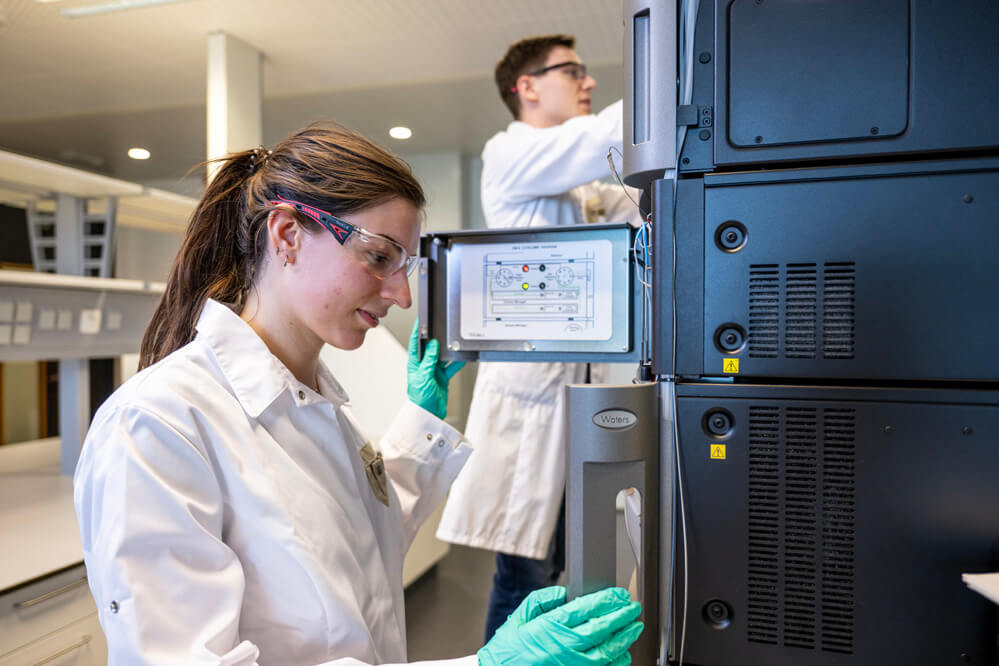


Medtech incubators provide personalised support to early-stage founders, including access to specialized prototyping facilities, clinical partners, and technical experts. They offer support in refining technology, validating safety and usability, and designing research strategies that best fit medical regulations and clinical workflows.
Medical device development involves scientific validation, clinical testing, and adherence to tight regulatory frameworks. Incubators and accelerators provide access to certified infrastructure, partnerships, and technical expertise for a startup to accelerate this process, reduce risk, and strengthen the evidence package necessary for commercialization.
Yes, medtech incubators can be pivotal in connecting founders to regulatory experts and compliant resources for better navigating complex regulatory frameworks such as FDA 510(k), EU MDR/IVDR, and digital health regulations. They help and guide on the very important areas necessary for regulatory approval, which include risk management, usability testing, quality systems documentation, and clinical evidence planning.
Many medtech incubators partner with hospitals and clinical networks that provide startups with the opportunity to test prototypes in real-world settings. This enables teams to assess usability, workflow integration, data accuracy, and safety early in the development process, greatly enhancing clinical relevance and adoption potential.
Most incubators for medtech support early-stage funding through venture capital networks, non-dilutive grants, and partnerships with innovation agencies, while some offer internal seed funding or venture-studio models to alleviate the costs at the early development stages.
Medtech incubators usually provide access to clean rooms, biosafety laboratories, engineering workshops, digital health testbeds, sensor calibration, and rapid prototyping manufacturing tools. Such resources shared by an incubator allow those kinds of entrepreneurs to test and refine their ideas for devices without having to invest a fortune upfront.
The terms incubator and accelerator are sometimes used interchangeably to describe programs along a continuum of support. Incubators offer much-needed help for concept validation and prototype refinement, while accelerators address investment readiness, clinical scaling, and market entry strategies. Lattice works with both incubators and accelerators to smooth the journey from innovation conception through successful translation.
There are different medtech incubator programs based on the project needs. They focus on key stages such as clinical feedback, compliance preparation, and prototyping.
Founders should consider the incubator’s clinical relationships, lab certification and capacity, the quality of mentorship, specialist infrastructure access, and financial options. In order to manage the complexity, domain expertise in areas like digital health, implantables, or diagnostics is needed.
Yes, most incubators support such operational needs for consumable management, quality systems, documentation, and early planning for ISO or GMP. This removes the administrative load from the startup and helps them maintain compliance during the process of development.
Yes, many incubators now provide resources on AI and digital health, including datasets, machine-learning validation support, regulatory technology tools, and guidance on privacy-by-design. It enables founders to build compliant, safety-first AI-enabled medical devices right from the start.
Switzerland
Phenyl – 2nd floor
Route de la Corniche 3
1066 Epalinges
